The recurring complaint and what changed when we finally listened.

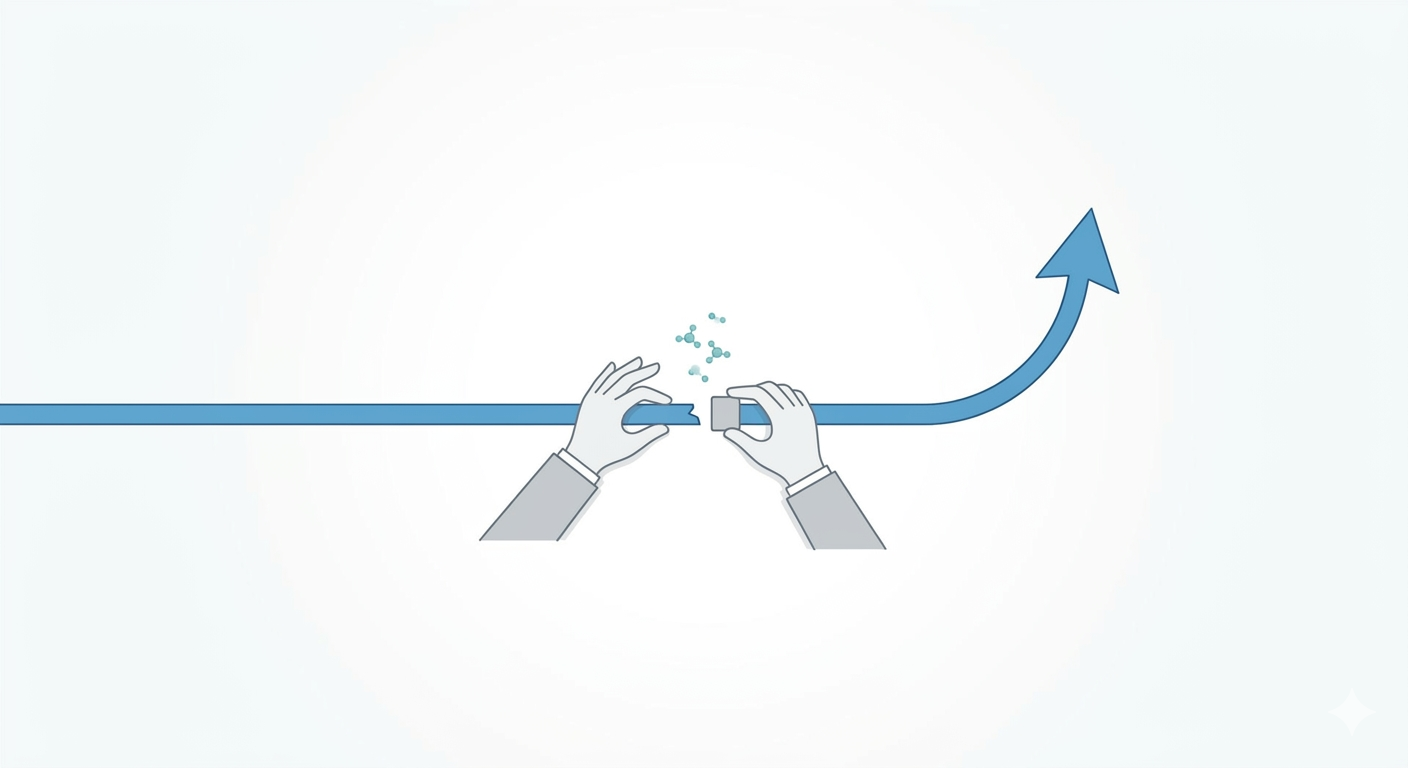
Weeks long investigation into a recurring operational issue. A small tightening in the operational gap after gathering all the facts. And the account that rose to top two in the portfolio because client's confidence in vendor commitment was strengthened.
The account a glance
Over 10 shipments with the same reported issue
2 weeks investigation from first complaint to permanent fix
$40k sustained revenue from the same product line
0 revenue lost during the complaint period
Overview of the account before the complaints
The account was a little over a year old and stood strong in the books. The relationship with the main contact person was healthy. Few support tickets raised but nothing major in the data to suggest or create an uproar.
The product in review was a physical item shipped from our global offices to the client. The regional office which fulfilled any of the requests was strictly determined by the final usage destination of the product. This decision was strategic to reduce the myriads of regulatory restrictions and added costs.
We always shipped the product ready to use immediately. No extra special configurations were necessary. The products were essentially delivered as plug and play. And the client expected this standard across the different regional offices.
What came this time from this office was not defective. Fulfilment simply left out one step. It was a deliberate operational decision from that office, and this was not only specific to this client. All accounts with a certain annual recurring revenue (ARR) had this step intentionally omitted. If required, they had to be expressly written on the client account for that region to respect the same when shipping the product of this subject.
The first support ticket came in. Notes were taken and the issue quickly resolved. No theatrics. Then came the second call, a third, and a few more.
For each time, technical support resolved it quickly and got things right along.
In the other regional offices, this simple step was built into their processes – no special arrangements were needed for adherence.
All the complaints were on the same technical issues. This quickly became a nuisance, and the client minced no words in pointing it out. One call can be tagged as an incident and easily discarded. Repeated occurrence of the same incident smacks of a process gap. The question arises, “Is anyone paying attention enough to spot the troubles or these are being handled as isolated cases?”
The added layer to missing an early resolution was that the customer was not the final direct user of the products. This was a mutually dependent component to satisfy the client’s final production. Also, the support logs were not set up to trace patterns if no one is deliberately tasked to catch such issues.
Details of the complaint
As noted, the product was not defective. And this made the complaint resolution the more easy and cleanly executed. It’s worth adding that the customer could fix that issue if they wanted to but did not.
And so, for each time a support ticket was raised, the situation was explained as a simple occurrence not needing major fixes. The customer was taken through a step-by-step guide to resolve the issue. The case was closed soon after the call had ended.
The complaint nonetheless kept coming, and for each time, it was treated as an isolated case just like the one prior, leaving the main root cause untouched. The customer’s frustration grew with the ordeal the product put them through.
It was simply repetitive and about time someone took a keen interest in providing a lasting solution. Every call for support chipped away from the trust account built over time.
Repeated unresolved complaints are precursors to churn. They entrench the client’s decision.
Anatomy of the investigations
An internal escalation revealed the gap masked under administrative and operational requirement. Working with flat hierarchies made for easy, transparent communication, and fast problem-solving.
The question was direct: how do you configure this product prior to shipment? And the answer confirmed my findings following a detailed investigation. Other global offices had this configuration step as a standard procedure, not a special requirement.
In fact, the simplicity of this standard procedure significantly reduced support tickets. This office had a slightly different process; it was not negligence. It was assumed that all offices run under the same operational principle. This assumption was utterly wrong in this instance.
Out of eleven shipments identified for the investigation, each one had a complaint attached and the pattern was consistent across the board: the same product, missing configuration, and from same office.
Details of the investigation
- Not a customer-facing interaction: internal escalation to IT and operations teams.
- Scan issue logs against shipments across different offices to find patterns
- Trace complaint to activity source, i.e., IT, operations, Sales, Customer Success failure or fulfilment.
- Two weeks to map, analyze and stamp root cause before attempting solution implementation with the team.
The conversation with the team to fix things was the easiest part. The real work was digging through past shipments to identify reported cases, establish that it was a process but not a product issue.
The solution
No system overhaul was needed; just two simple steps added to the order fulfilment process for this product category from that office. This was the kind of change that required no immediate or future financial investment. It was significant to restore trust and reduce support tickets from this account.
The next couple of shipments were closely monitored for signs of any complaint. None was received which could be linked to the exact same issues reported. The client was satisfied with the fix.
We however received calls for support every now and then, but this mostly were issues relative to end-user confusion on who call when they have platform setup problems. Our technical team often try to support for minimal cases, since it is our hardware being used. But for major topics, the end-user is directed to our partner for support.
The impact after listening
The numbers kept a study rise after the solution. This was easy to monitor. What was more subtle and difficult to measure was the increased confidence to the extent that the client relied on our internal resource to resolve some platform-specific issues for their end-user clients. The client felt heard and valued.
Following from this, product adoption and renewal conversations landed with ease – no pushback. An account hitherto inundated with support tickets and silently heading into the churn reports has now become one of the most stable so far.
Revenue increase from product adoption after resolving the issues averaged $40,000. This account has risen to top two in the portfolio, and it holds immense prospects in the near-term expansion and revenue generation.
Lessons learned
When a customer raises a support ticket, the first instinct is to solve the issue immediately. In most cases, the solution stops short of asking a critical question: why did/does this happen? An honest answer lays the groundwork for relationship strengthening, securing retention and facilitating growth.
Complaint resolution must be treated as a commercial act with direct impact on retention and expansion.
The solution, adding the missing step was not complicated. Anyone from the team could do it on the next shipment due that afternoon. The more challenging part was the willingness to escalate internally; refer to all projects from the account and cross-reference support logs to rule out the assumption these were unrelated. The effort to investigate was the differentiator, not the fix.
The speed of the resolution signaled respect for the partnership. It was a test of the vendor’s commitment to quality and continued usage. These actions restored confidence based on real outcomes. The revenue increase followed from the commitment, speed and action of all the teams involved.
Like what you just read?
This is what I write for CS leaders; in their voice, and for their audience.